


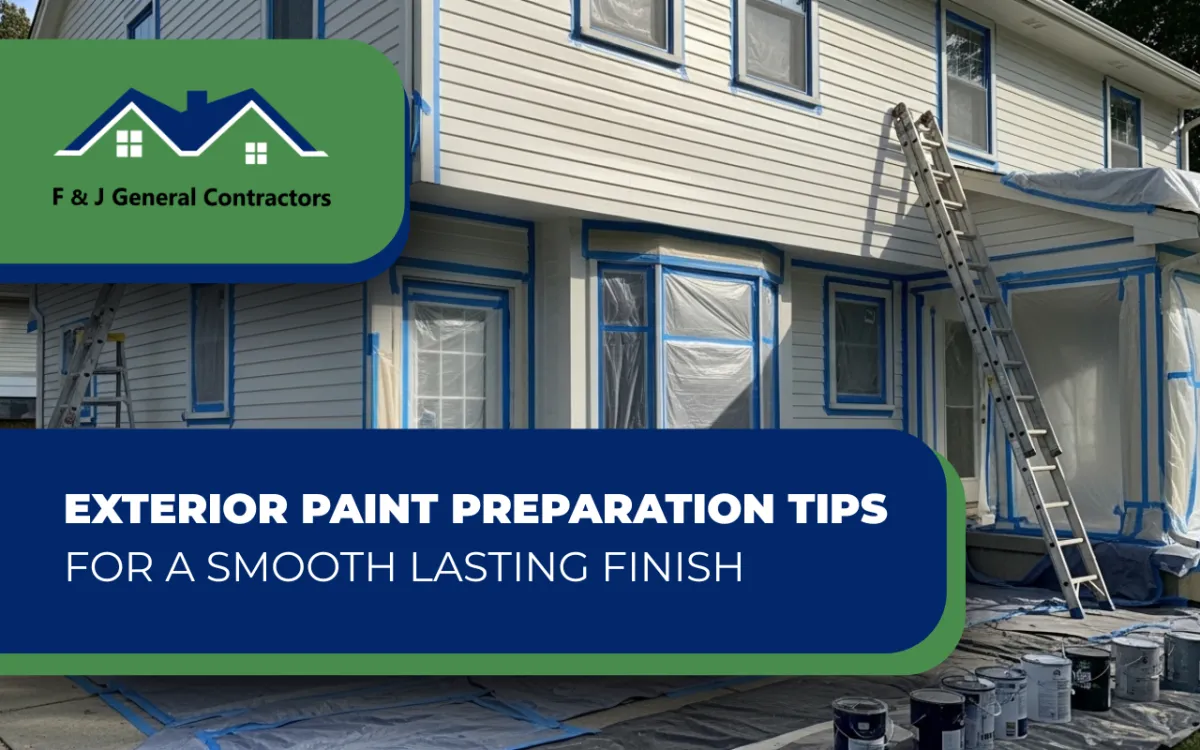
Exterior Paint Preparation Tips For A Smooth Lasting Finish
Exterior paint preparation is the first step toward a clean, strong, and beautiful home finish. A fresh coat can lift curb appeal, yet the best results start before any brush touches the wall.
At F & J General Contractors, we focus on cleaning, fixing, sanding, and priming because each step helps paint bond better. As a result, your exterior can look brighter and stay protected longer.
Exterior paint preparation matters before color goes on
Exterior paint preparation helps stop peeling, cracking, and uneven color. When the surface is clean and firm, paint can hold better and cover more evenly. Therefore, this step protects both the look and the value of your home.
Surface preparation also helps us spot cracks, mold, loose paint, and weak areas early. Once these issues are fixed, the final coat can resist weather, moisture, and daily wear with better strength.
Clean surfaces help fresh paint bond much better
Clean walls give paint a stronger place to stick. Dirt, mildew, dust, and chalky residue can block proper bonding. Because of that, washing the surface first can prevent early peeling and patchy results.
Remove loose dirt, dust, and spider webs.
Wash mildew or algae with the right cleaner.
Rinse well so no soap film stays behind.
Let the surface dry before sanding or priming.
With a clean base, the next steps become easier and more effective. This is why our team treats cleaning as a key part of a lasting exterior painting project.
Power washing before painting creates a cleaner foundation
Power washing before painting can remove grime from siding, trim, and textured areas faster than hand scrubbing. However, the right pressure matters. Too much force can damage wood, siding, or older surfaces.
We keep the spray moving in steady lines and protect nearby plants, windows, and fixtures. After washing, surfaces must dry fully before repairs or primer are added. This simple pause helps avoid trapped moisture.
Peeling paint repair protects the new coat
Peeling paint repair is needed when old paint has lifted, cracked, or lost its grip. If loose paint stays in place, the new layer may fail quickly. For that reason, every weak area should be removed and smoothed.
Scrape away loose flakes and failing paint.
Brush the area to remove small debris.
Fill holes, gaps, and cracks with care.
Sand repaired spots until they feel even.
We handle this step with close attention because repairs shape the final look. A smoother surface allows each coat to sit evenly and last longer.
Sanding and priming prepare walls for stronger coverage
Sanding softens rough edges, old paint lines, and filled cracks. It also helps primer and paint hold more evenly. After sanding, all dust should be wiped away so the surface stays clean.
Primer seals porous spots, covers stains, and creates a steady base. As a result, the finish can look more balanced and resist peeling better. This step supports long lasting exterior paint in every season.
Better tools make exterior painting easier and cleaner
Good tools help create smoother lines, better coverage, and less mess. Brushes, rollers, tape, drop cloths, and extension poles all support cleaner work. Also, using the right tool for each area saves time and reduces mistakes.
Use angled brushes for edges and corners.
Choose rollers with the right nap for the surface.
Protect floors, plants, and fixtures with covers.
Clean tools after use to keep them working well.
At F & J General Contractors, we match tools to the surface and product being used. This helps each coat look neat, even, and professional.
Frequently Asked Questions
How long should surfaces dry after washing?
Most exterior surfaces need 24 to 48 hours to dry after washing. However, drying time can change with shade, humidity, and weather.
Can I paint over peeling paint?
Painting over peeling paint is not recommended. Loose areas should be scraped, repaired, sanded, and primed before any new coat is applied.
Is primer always needed before exterior painting?
Primer is important on bare wood, stains, repaired spots, and porous surfaces. It helps the topcoat bond better and look more even.
What weather is best for exterior painting?
Mild, dry weather is best. Very hot, cold, wet, or windy days can affect drying, bonding, and the final appearance.
How does prep work help paint last longer?
Exterior paint preparation removes weak layers, cleans the surface, and creates a firm base. This helps support long lasting exterior paint results.
Careful preparation leads to lasting exterior beauty
Exterior paint preparation gives your home a stronger start and a cleaner finish. From washing and sanding to peeling paint repair and priming, every step helps the new coat perform better.
At F & J General Contractors, we take this process seriously because your home deserves a finish that looks good and holds up well. With proper surface preparation, you can enjoy long lasting exterior paint and stronger curb appeal.