


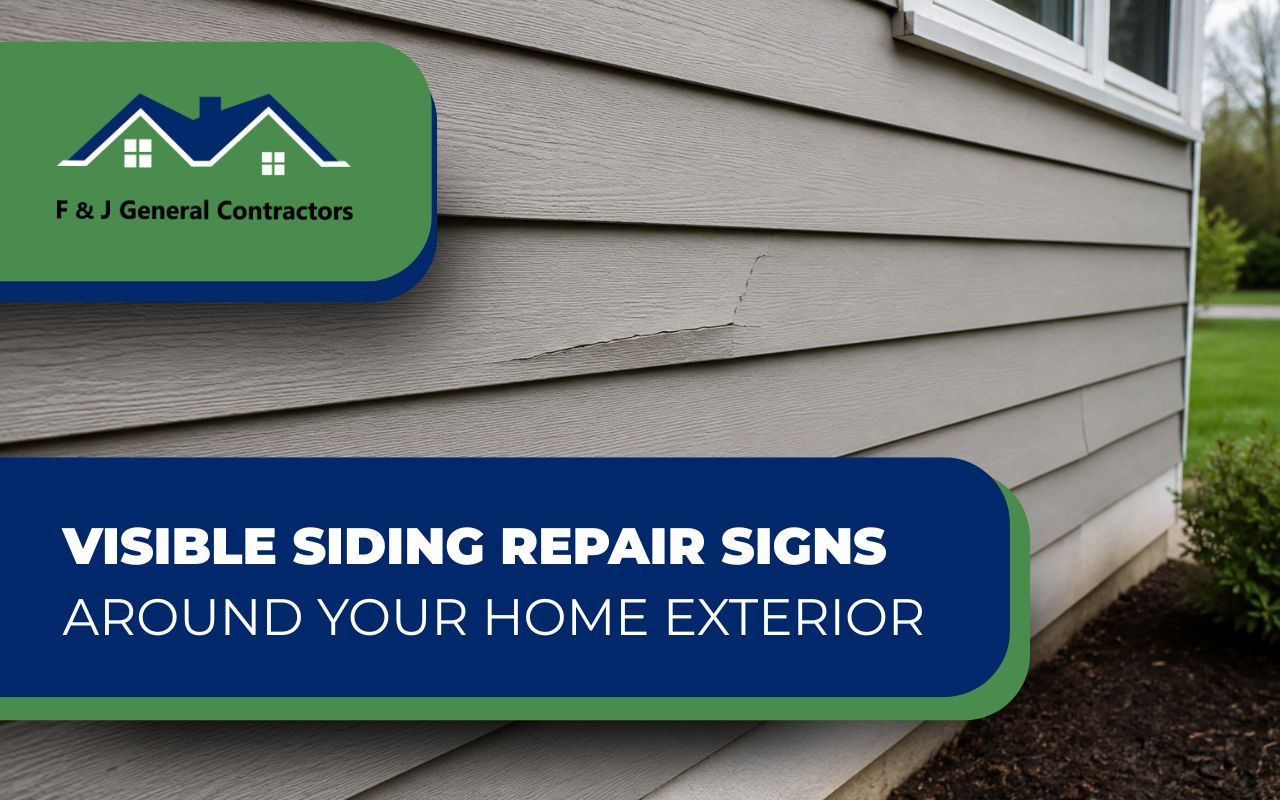
Visible Siding Repair Signs Around Your Home Exterior
Assessing your home’s exterior can reveal problems that are easy to miss. Cracks, gaps, and stains may look small, yet these siding repair signs can lead to serious damage when ignored.
At F & J General Contractors, we help homeowners protect their walls before small issues grow. Because siding is your home’s first shield, early action keeps your exterior safer and stronger.
Regular Siding Checks Protect Your Home From Damage
Regular checks help you notice early siding repair signs before repairs become stressful. Look closely at your walls in spring and fall, especially after heavy rain, strong wind, or long sunny days.
During each walkaround, focus on areas near windows, corners, doors, and the lower wall sections. These spots often show damage first because they face more water, heat, and daily wear.
Check for gaps, dents, stains, and soft areas.
Look for panels that seem bent or uneven.
Notice any wall sections that feel damp.
Small Cracks Can Lead To Bigger Wall Problems
Cracked siding may seem like a minor surface issue, but it can open a path for water. Once water enters, the crack can spread and weaken the wall beneath it.
Also, cracked siding is one of the clearest siding repair signs after storms or strong heat. A quick repair can help prevent wider gaps, peeling paint, and hidden rot.
Loose Panels Can Expose Your Home To Weather
Loose siding panels can move during wind and let rain reach the wall behind them. As a result, your home may lose part of its weather barrier without you noticing right away.
When a panel shifts, insects and water can enter small openings. With F & J General Contractors, you get clear guidance on whether the panel can be secured or should be replaced.
Watch for panels that rattle or lift at the edges.
Check for missing nails, clips, or fasteners.
Cover open gaps until a proper repair is made.
Hidden Moisture May Harm Walls And Indoor Comfort
Moisture behind siding can show up as stains, soft spots, mildew, or bubbling paint. However, some moisture damage stays hidden until it affects the wall frame or indoor air.
Inside the home, musty smells or peeling wall coverings may point to water entering from outside. Therefore, early checks can reduce the risk of mold, rot, and exterior wall damage.
Insects Can Make Siding Damage Worse Over Time
Small siding gaps can invite termites, carpenter ants, wasps, and other pests. Once insects move behind the siding, they may damage wood, build nests, or make openings larger.
Because pest activity often starts quietly, look for tiny holes, sawdust-like dust, buzzing, or mud tubes. When these signs appear, fast action helps protect the siding and the wall structure.
Simple Care Steps Keep Your Siding Strong Longer
Simple maintenance helps your siding last longer and keeps your home looking clean. Gentle washing, trimming nearby plants, and sealing small gaps can prevent many common siding problems.
Also, a good exterior finish can protect siding from water and sun. For more planning tips, read our guide on choosing the right exterior siding.
Wash siding gently twice a year.
Trim shrubs and branches away from walls.
Seal small gaps before water enters.
Frequently Asked Questions
How often should I check my siding?
You should check your siding at least twice a year. It is also smart to inspect it after storms, strong wind, or long periods of rain.
Can small cracks wait until later?
Small cracks should not be ignored. They can let water enter, and over time, that water may cause rot or wall damage.
What causes siding panels to become loose?
Wind, age, poor fastening, impact, and moisture can all loosen panels. Once they move, the wall behind them becomes more exposed.
How do I know water is behind siding?
Look for stains, mildew, soft areas, peeling paint, or musty smells. These may mean moisture behind siding has reached hidden parts of the wall.
Should I repair siding myself or call professionals?
Small sealing jobs may be simple. However, wider damage, missing panels, or signs of rot should be checked by trained professionals.
Talk With Our Team Before Damage Spreads Further
When siding repair signs appear, fast action can protect your home from deeper damage. Our team can inspect the issue, explain your options, and help you choose the next safe step.
When customers contact F & J General Contractors, we focus on clear answers and careful work. To get help with your siding, check out our contact pagefor siding support.